Cleaning methods in the food industry I
7 April 2025
Cleaning Out of Place (COP) in the spotlight
In the food industry, the most commonly used cleaning methods are
1️. Cleaning Out of Place (COP)
2. Cleaning in Place (CIP)
In the coming weeks, we will compare these methods.
What are the advantages and disadvantages?
For which installations are they suitable?
And what is the best solution for your process?
Today: Cleaning Out of Place (COP)
What is COP?
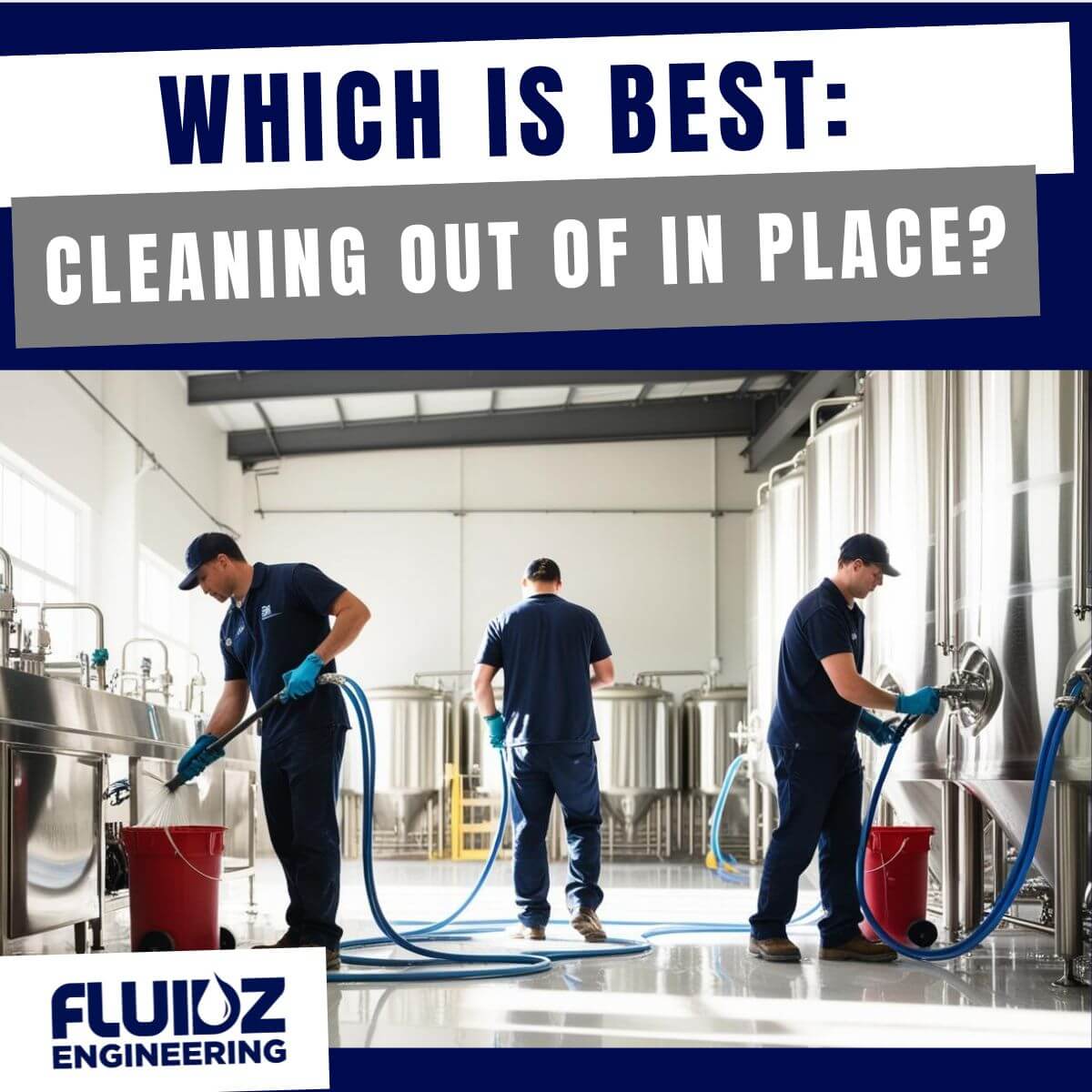
In this method, machine parts are disassembled and cleaned separately.
This can be in special cleaning stations or immersion baths, but also manually, with high-pressure or foam lances.
Advantages:
✔ Thorough cleaning of hard-to-reach parts
✔ Flexible
✔ Low investment costs
✔ Efficient for small components
Disadvantages:
✖ Time-consuming and labor-intensive
✖ Parts need to be moved to a separate room
✖ Risk of incorrect assembly after cleaning
✖ Frequently requires rinsing to remove chemical residues
✖ Manual cleaning can lead to inconsistent results
✖ Less suitable for closed systems or internal parts of machines
✖ Unable to validate and control
✖ Not efficient for large systems
For which sectors is COP ideal?
🥛 Dairy: Small parts, such as valves and fittings, pipe parts, tanks, etc.
💊 Pharmaceuticals: Small, sterile components, often required by regulations
🍺 Craft breweries: Smaller, detachable components, such as taps and filters
🥤 Liquid foods: Valves and pumps that are difficult to clean via CIP
Conclusion:
Cleaning Out of Place is perfect for small, complex parts and hard-to-reach areas.
But due to high labor costs and validation challenges (such as HACCP/IFS), it is often not sufficient as the only cleaning method.
Next time: Cleaning with Cleaning In Place!
What advantages and challenges does this method bring?
Stay tuned! 💡